



A brief journey and ramble through the different extremities of majority-minority relations, or marginalization, within society…
Pluralism

Is an idealistic paradigm where all groups in a society live in relative coexistence, sharing cultural norms, equal-ish status, and rule of law.
The goal of plurality is not to forego one’s origin culture; rather, it aims to establish an additional societal layer by adding a functional hybrid and egalitarian middle-ground which allows ad-hoc cooperation and integration between new cultures.
We see pluralist tendency particularly in major and capital cities of the world. Generally, a stronger economy is needed to support a plural society which has its pros and cons derived from how well it’s managed and how well governments communicate and integrate capacity planning.
Countries such as the UK and America come to mind which have a mix of European, South American, Arab, African, Asian, and many other people. Although modern plural life is not always an equal and peaceful coexistence, it is immensely more favorable to other methods of pluralism.
Historically, pluralism has in large stemmed from top-down marginalization from military conquest or annexation by a greater power. In periods of large-scale conflict, we see the forceful and transient absorption of people into new societies. The trend among winning empires is the initial slaughter and exile of any who oppose it or present danger; a period of varying levels of segregation follows, then over the course of time, if the level of segregation manages to balance out and improve, the survivors become indistinguishable from the imposed society through assimilation – until some other empire comes along and the cycle repeats.

Pluralism isn’t always a moral good however, it can also take a route of forced assimilation, such as with the Romani people under the Habsburg monarchy of Austria-Hungary between 1740 and 1780, which saw them deprived of rights restricting their mobility, prohibiting inter-Romani marriages, and banning the use of the Romani language and culture in an attempt to destroy their origin identity and force them to integrate. This is similar to the many historical attempts of the English to destroy Irish identity and culture, the most successful of which arguably being the detachment of our Irish language, tá sé ceart go leor, áfach, déanann muid magadh díobh sa rugbaí.
The Romani population of 20th century Norway were subjected to laws allowing their children to be taken and placed into state institutions, similar to the Australian Assimilation Policy used to force the Aboriginals and Torres Strait Islanders to assimilate.
Segregation

Is where different categorizations of people are separated into discrete social groups whether by race, age, religion, gender, wealth, with the negative connotation of inferiority. It is an effective yet unsustainable way to keep the status-quo of power upon the sudden introduction of new and different people. I think of it as a tool used to make sure current government structures, seats of power, and societal hierarchies face fewer challenges to their ubiquity.
Segregation is like the Tartarus of social marginalization (minus the divine punishment), it has a certain feedback loop depending on how much or how little of it is present. Over-reliance of it festers a cycle of rebellion and civil conflict which can further devolve to expulsion, genocide, or in exceedingly rare circumstances, elite-backed coup d’état; underutilization of it poses too quick a change to social norms and established hierarchies, causing societal dissonance between the established and the newly acquired – often still regarded as foreign. If left unchecked, this has the potential to breed a culture of chronic hatred that becomes increasingly immoveable.

Often, the majority holds power (or at least the belief that it does), but this is not the case in oligarchical (the rule of few) or autocratic (the rule of one) government structures. Examples of modern-era countries with strong oligarchical influences in government include South Africa under apartheid, China, Ukraine, USA, Iran, the Philippines, and Russia, where a minority of the racial, religious, or plutocratic elite consolidate a substantial amount of power.
Autocracies arise from ethnonationalist governments that conform to a single state ideology, often not tolerating much or any cultural pluralism. An extreme example is North Korea, where the Kim Dynasty acts as an unquestionable autocracy, ruling through power and its cult of personality, and virtually any form of media perceived as Western influence is illegal.
Expulsion

Is the exclusion of certain racial or ethnic groups from society over others, often a precursor to complete exile. A process of dehumanization is often employed to sway opinion against those targeted for expulsion.
Perhaps the most popularized example of expulsed people concerns those of the Jewish persuasion. From Nazi Germany back to ancient Egypt, the venerable Jews have been subjected to quite a lot of religious- and ideological-fueled exile throughout the ages.
Genocide

The most extreme form of marginalization is genocide, a combination of the Greek ‘geno-‘, race/tribe, and the Latin ‘-cide’ killing, where one group resolves to exterminate the other, taking any measures necessary and constructing any ideology for justification.
Examples for Further Study:

- 416 BC: The systematic destruction of the island city-state of Melos by the Athenian Empire
- 149 BC: The Siege of Carthage, Third Punic War: Roman extermination of the Carthaginians
- 1700s – Today: Genocide of Aboriginals and Torres Strait Islanders by Australia
- 1910s: Armenian Genocide by the Ottoman Turks
- 1930s-1950: WWII-era genocides, the Holocaust, Stalin’s USSR, Japanese Nanjing Massacre
- 1950s-1970s: Class-based and counterrevolutionary genocide in Maoist China
- 1960s-1990s: Guatemalan genocide against the Maya people and alleged communists by the Guatemalan government and supported by the US
- 1970s: The Cambodian/Pol Pot genocide, enacted by the Khmer Rouge government
- 1970s: Bangladesh genocide, mass murder and genocidal rape perpetrated by Pakistan against Bengali Hindus
- 1990s: Rwanda, the extermination of the Tutsi population by the Hutus
- 1990s: Bosnian genocide, mass killing and rape of Bosnian Muslims by the Bosnian Serb Army
- 2010s: Yazidi genocide, Islamic State’s (Daesh) massacre of Yazidi (Kurdish) men and rape and trafficking of Yazidi women and children into sexual slavery throughout Iraq
- 2020s: Gaza, the most covered mass-extermination of today is perpetrated by Israel in what is absolutely a genocide against Palestinian women and children
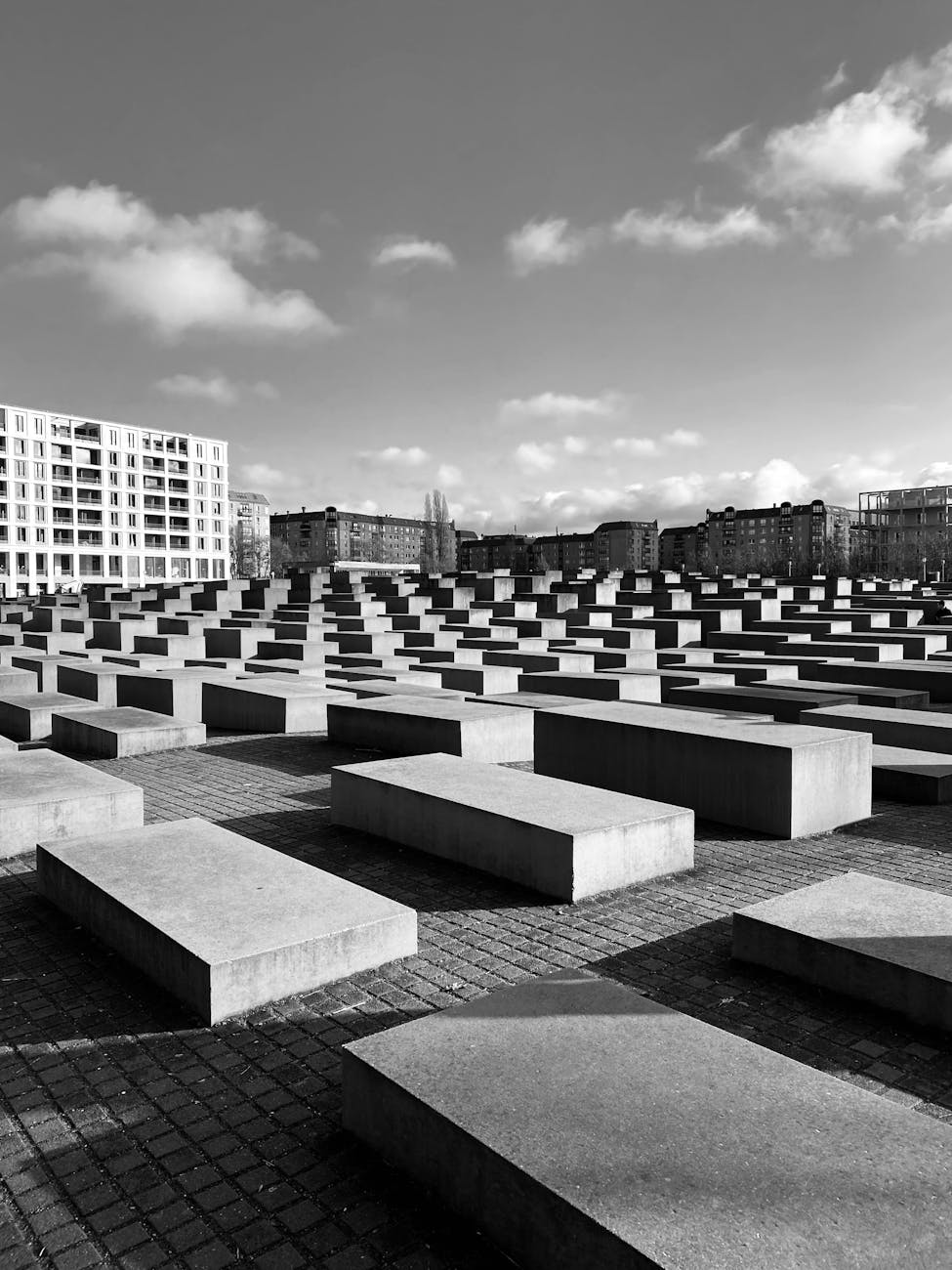
Perhaps the most extreme collapse from pluralism to genocide in recent memory can be found in pre-WWII Nazi Germany (and later in Croatia, Hungary, and Romania), where the Jewish (along with the Romani and Black) population that lived and worked there were first segregated from German society and gradually stripped of their rights, expelled out into neighboring countries such as Poland and France, then finally, when the Germans went on to invade and occupy countries the Jews had fled to and nowhere was left to exile them, veered into the atrocities of the Holocaust.
~ G.G. May 2024
 Giuseppe Gillespie Writing
Leave a comment